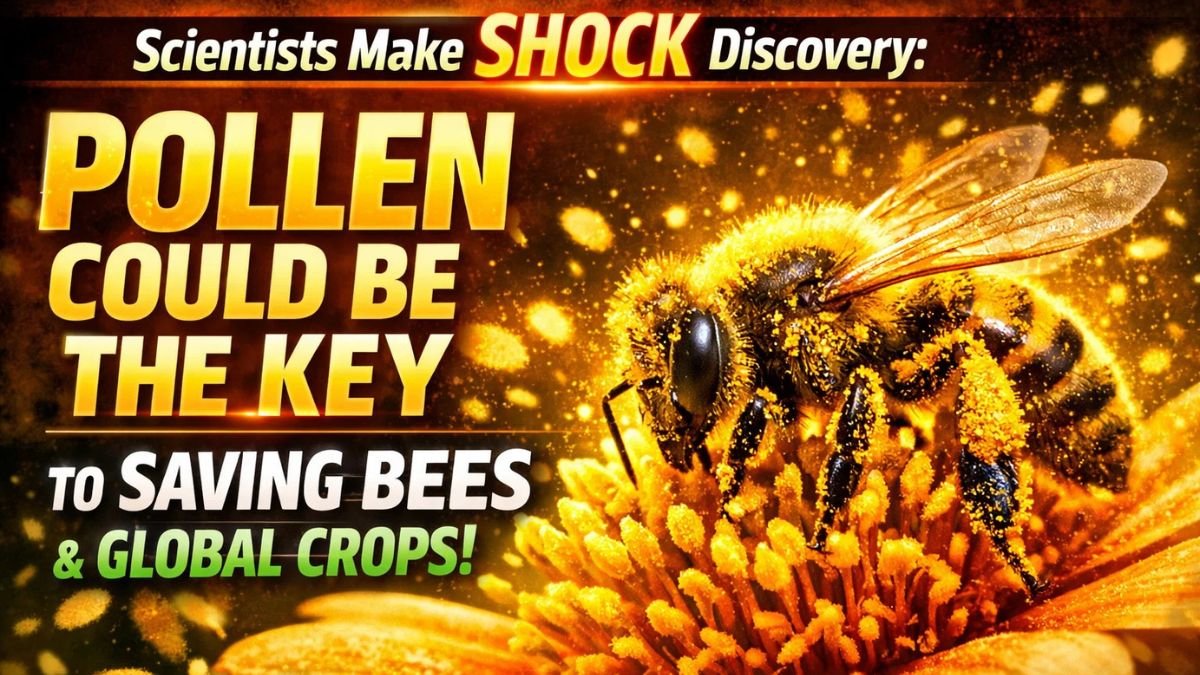
Scientists Make SHOCK Discovery: Bee colonies around the world are weakening under the pressure of pesticides, parasites, climate change, and disease. Scientists have long sought solutions to this crisis, as bees not only provide honey, but a significant portion of global food production depends on their pollination services. Now, researchers have identified microscopic allies hidden within pollen grains that could revolutionize the protection of both bees and crops.
New studies have revealed that pollen is not only the genetic material of plants, but also contains a rich world of microorganisms. These microorganisms can act as a natural “pharmacy” within bee hives.
Pollen: Not Just Food, a Living Microbe World
Until now, beekeepers viewed pollen primarily as a protein-rich food that supports larval development and colony growth. However, scientists have discovered that pollen contains a variety of bacteria, a large number of which belong to the Streptomyces group.
This is the same bacterial group from which many antibiotics used in human medicine are originally derived. These microorganisms found in soil are capable of producing biochemical compounds. Surprisingly, these bacteria present in pollen grains can also provide antibiotic-like protection for bees and plants.
Researchers isolated dozens of bacterial species from fresh flower pollen and pollen stored in hives. Nearly three-quarters of them belonged to the Streptomyces family. This clearly indicates that pollen is not just an inert substance like dust, but a medium for complex partnerships between plants, microorganisms, and insects.
Microbial Sentinels Against Bee Enemies
Bee colonies are plagued by numerous pathogens—viruses, bacteria, fungi, and parasites like Varroa. More than 30 pathogens have been found in hives worldwide. Many commercial beekeepers rely on antibiotics, but this is increasing the problem of resistance and residues.
Laboratory tests found that Streptomyces bacteria obtained from pollen inhibited the growth of several dangerous pathogens. For example, the growth of Aspergillus niger, the fungus that causes stonebrood disease, was significantly suppressed by most strains. This disease hardens and hardens larvae.
Similarly, some bacteria were found to be effective against Paenibacillus larvi—the cause of American foulbrood disease. This disease is so severe that infected equipment may have to be burned.
Effective in Crop Protection
This discovery is not limited to bees. The same bacteria were also found to be active against several serious plant diseases. For example, pathogens such as Erwinia amylovora (fire blight), Pseudomonas syringae, and Ralstonia solanacearum pose a major threat to global agriculture.
These pollen-borne microorganisms showed moderate to strong effects against these diseases. This means that bees not only pollinate, but also inadvertently transport beneficial bacteria between fields.
Natural Antibiotics Produced Within Pollen
Streptomyces bacteria are extremely biochemically active. They produce compounds such as macrolactams, cyclic peptides, and siderophores. Siderophores are particularly notable because they strongly bind iron. Since many pathogens require iron for growth, this process weakens them.
The special feature of these compounds is that they are relatively stable and have low toxicity on non-target organisms. Therefore, they may be promising options for use in the field.
From Plants to the Hive: A Continuous Journey
Genetic analysis indicates that these bacteria are not simply foreign particles stuck to the surface of flowers, but rather endophytes living within plant tissues. Endophytes are microorganisms that live within plants without causing disease and sometimes even help plants cope with stress.
When bees collect pollen, they bring these microorganisms with them. These bacteria remain active in the “bee bread” stored in the hive and continue to produce antimicrobial compounds, protecting both the larvae and the food.
Beyond Chemical Medicines: Probiotic Beekeeping
Antibiotics such as oxytetracycline and tylosin have traditionally been used in beekeeping. However, residues of these can be found in honey and wax, and pathogens can become resistant to them.
Against this backdrop, the concept of “probiotic beekeeping” is emerging. Instead of killing pathogens with chemicals, it aims to promote beneficial microorganisms in hives. For example, Streptomyces isolates from local plants could be added to supplemental pollen mixtures.
However, extensive field trials and long-term studies will be necessary to ensure that new microorganisms do not harm other beneficial organisms.
A New Approach to Crop Management
If these microorganisms are developed as biological control agents, farmers can use them in seed coatings, flower sprays, and They can be used as fertilizers or soil improvers. This could reduce dependence on chemical pesticides.
Collaborative strategies can be adopted between bees and farmers, which involve the exchange of beneficial microbes along with pollination. This way, bees will not only spread pollen but also provide a protective mechanism in the fields.
The Growing Importance of Floral Diversity
The study also indicates that the microbial diversity of pollen is linked to local plant diversity. Areas with monotonous crops may have higher pollen volumes, but lower microbial diversity. In contrast, areas with diverse wildflowers and mixed crops are more likely to have beneficial bacteria.
This makes it clear that biodiversity is not only an ecological issue but also a cornerstone of agricultural safety.
Future Directions
Although this research has many positive signs, some risks and uncertainties remain. The large-scale use of antibiotic-producing bacteria could impact environmental balance. Therefore, regulatory bodies and scientists must carefully evaluate them.
Nevertheless, the idea that bees can protect themselves and their crops with the help of natural allies already present is inspiring for the future of agriculture. It’s a step toward strengthening nature’s existing partnerships rather than resorting to chemical warfare.
This invisible army hidden in a tiny pollen grain reminds us that solutions often lie within nature itself—we just need to understand and respect them.
FAQs
Q. What did scientists discover about pollen?
A. They found that pollen contains beneficial bacteria, especially Streptomyces, which can produce natural antibiotic-like compounds.
Q. How do these bacteria help honeybees?
A. They suppress harmful pathogens that cause serious bee diseases like American foulbrood and stonebrood.
Q. Can these microbes also protect crops?
A. Yes. The same bacteria can slow down plant diseases such as fire blight and bacterial wilt.