

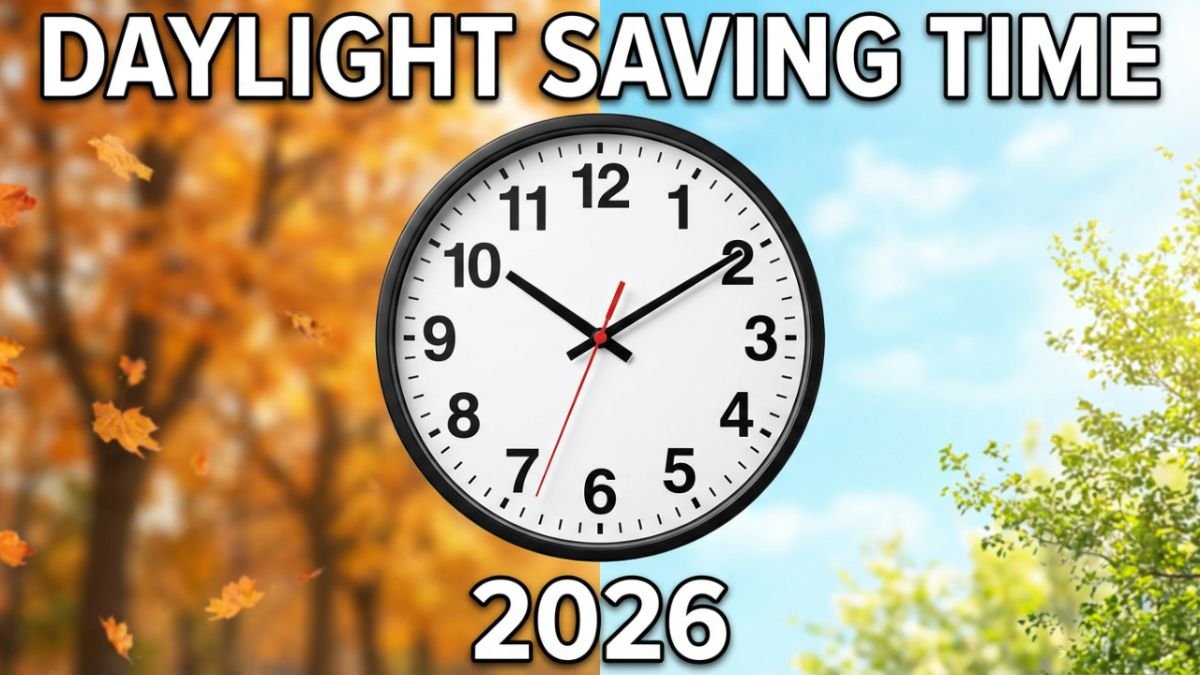
Every year, when Daylight Saving Time (DST) goes into effect, people experience a significant shift in their daily routines. Days become longer, evenings are brighter, and nights are slightly shorter. But in 2026, this change is even more noteworthy because Daylight Saving Time is starting earlier than usual, on Sunday, March 8, 2026. At 2:00 AM on this day, clocks will be advanced by one hour. This means the day will be only 23 hours long, instead of the usual 24.
While this change may seem minor, its effects on sleep, health, work, and daily life are noticeable. Therefore, it’s important to understand why this change is happening and how it will impact our lives.
Why is Daylight Saving Time starting early in 2026?
In the United States, the start and end dates of Daylight Saving Time are determined by federal law. According to the rules, Daylight Saving Time begins on the second Sunday of March each year. In 2026, the calendar falls in such a way that the second Sunday of March is March 8th, which is considered the earliest possible date for DST to begin.
This is why the change is happening a day earlier in 2026 compared to 2025. At 2:00 AM, the clock will jump to 3:00 AM. While most mobile phones, laptops, and digital devices automatically adjust the time, you will still need to manually set the time on things like wall clocks, microwaves, and car clocks.
What will be the impact on your daily life?
The most immediate and direct impact of Daylight Saving Time is on sleep. Even just one hour of lost sleep can affect the body and mind. Several studies show that for the first few days after the time shift, people may experience fatigue, irritability, difficulty concentrating, and lethargy.
Although it will be darker in the mornings for a few weeks, the sun will set later in the evenings. This will provide more opportunities to go for a walk, play sports, or spend time with family after work or school. However, for those who get up early for work, the initial days might be a little difficult, especially in northern regions where it remains dark until later in the morning.
Where is Daylight Saving Time not observed?
Although most of the United States observes Daylight Saving Time, some states are exceptions. Hawaii uses standard time year-round and does not observe DST. Similarly, most of Arizona does not observe Daylight Saving Time, although the Navajo Nation is an exception.
For people living in these areas, the time change in March 2026 will have no effect. Other states would need congressional approval to opt out of DST or make it permanent, so for now, most of the US will continue to follow the same system.
Could Daylight Saving Time be permanently abolished?
There has been a long-standing debate in the United States regarding Daylight Saving Time. Some want to eliminate the need to change clocks twice a year and make DST permanent. To this end, the Sunshine Protection Act has been introduced several times, supported by Senator Rick Scott.
However, no clear consensus has yet emerged in Congress on this issue. Some favor longer evening hours, while others believe that more morning light is better for health and safety. Former President Donald Trump also acknowledged that public opinion is roughly divided on this issue. Therefore, no major changes are likely in 2026.
Impact of Daylight Saving Time on Health and Safety
Some health risks increase after the introduction of Daylight Saving Time. Several studies have found a temporary increase in heart attacks, strokes, and road accidents in the days following the time change.
The main reason for this is lack of sleep and disruption of the body’s biological clock (circadian rhythm). This change is especially difficult for those who have to wake up early to go to work or school. In comparison, the time change in November, which provides an extra hour of sleep, is considered easier for people.
What was the original purpose of Daylight Saving Time?
The original purpose of Daylight Saving Time was to save energy. It was believed that more natural light in the evening would reduce electricity consumption. However, modern studies have shown that its effect is very minimal.
According to a report by the U.S. Department of Energy, DST reduces annual energy consumption by only 0.03%. In many cases, this savings is completely offset by increased use of air conditioners and heaters. This means that the original purpose of DST is no longer as effective today.
The History of Daylight Saving Time in the United States
Daylight Saving Time was first implemented in the United States during World War I to save fuel. It was repealed after the war but reinstated during World War II. Later, in 1966, President Lyndon B. Johnson signed the Uniform Time Act, which standardized DST rules across the country.
Over time, it has been linked to traffic safety and reduced crime, although there is still no clear evidence of these benefits.
What does the March 8, 2026, change mean for you?
Daylight Saving Time, which begins on March 8, 2026, will bring significant changes to people’s lives. While evenings will be longer and opportunities for outdoor time will increase, it may also lead to sleep deprivation and early fatigue.
Although the debate over Daylight Saving Time continues, the system will remain in effect through 2026. In such a situation, the best approach is to adjust your daily routine slightly before the time change, set important clocks, and give your body time to adjust to the new schedule. With proper preparation, the impact of this change can be significantly reduced.
FAQs
Q. When does Daylight Saving Time start in 2026?
A. Daylight Saving Time in 2026 begins on Sunday, March 8, when clocks move forward one hour at 2:00 a.m.
Q. Why is DST starting earlier in 2026?
A. Because March 8 is the second Sunday of March in 2026, which is the earliest possible date for DST to begin.
Q. How will the March 8 time change affect sleep?
A. Most people lose one hour of sleep, which can cause temporary fatigue, reduced focus, and disrupted sleep patterns.
Q. Do all U.S. states observe Daylight Saving Time?
A. No, Hawaii and most of Arizona do not observe Daylight Saving Time.
Q. Is Daylight Saving Time becoming permanent in 2026?
A. No, despite ongoing debates, there are no approved plans to make Daylight Saving Time permanent in 2026.
Leave a Reply